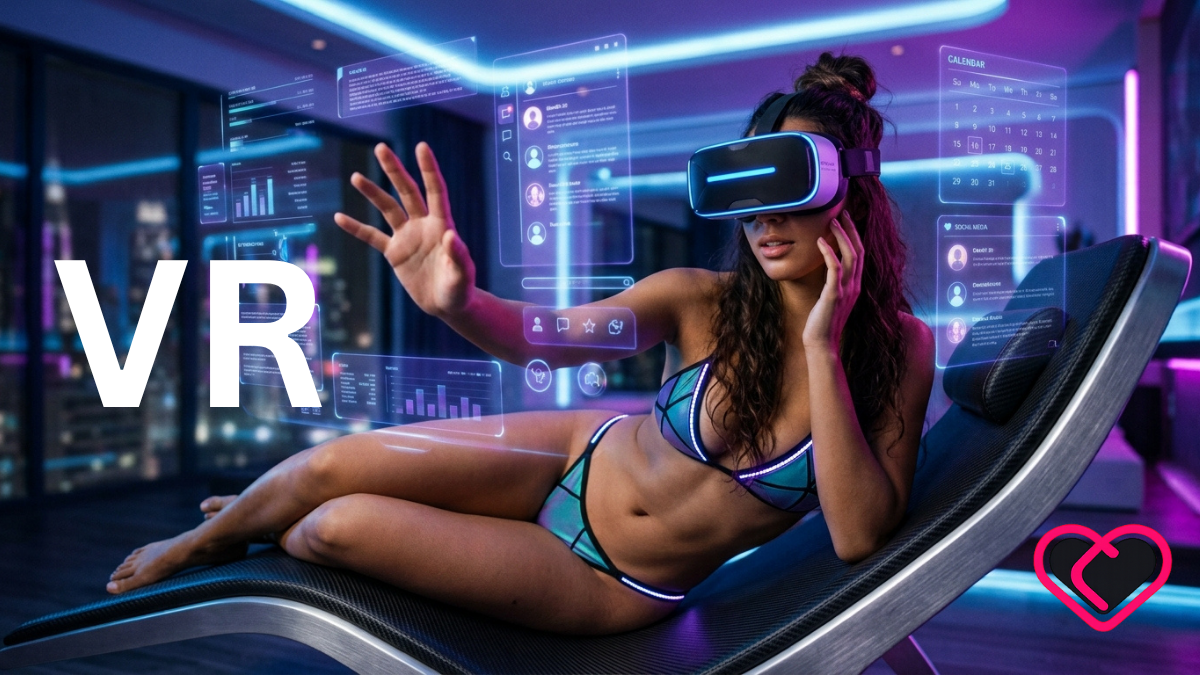
The adult entertainment industry has always been at the forefront of technological innovation, and virtual reality is no exception. VR cam shows represent the latest evolution in interactive adult entertainment, offering viewers a level of immersion that traditional 2D content simply can't match. As headsets become more affordable and accessible, VR webcam platforms are seeing rapid growth, with performers and audiences alike embracing the format.
The Rise of Immersive Cam Experiences
VR webcam technology turns passive viewing into an active, participatory experience. Instead of just watching a performer, users get a sense of being in the same room. The technology tracks head movement, letting viewers look around a virtual environment from different angles — creating a personalized experience that responds to their actions rather than a fixed camera feed.
The appeal lies in simulating physical proximity and shared space in a way flat video can't. It's currently the closest digital approximation to an in-person encounter.
The Tech Behind VR & AR Cam Platforms
VR cam sites rely on streaming tech optimized for low latency and high resolution, typically supporting headsets like Meta Quest, HTC Vive, and PSVR, with some platforms also supporting phone-based VR for wider accessibility. Because stereoscopic video is heavier than a standard feed, most platforms recommend at least 25 Mbps of bandwidth for a smooth experience.
AR cam chat is a related but distinct format that overlays digital content onto the real world rather than fully replacing it. It's earlier-stage in the adult space, but some platforms are experimenting with hybrid VR/AR modes that let users dial immersion up or down depending on their setup.
What This Means for Performers
VR shows bring new opportunities and new demands for performers. It typically requires investment in 3D cameras and hardware capable of processing and streaming stereoscopic video. In exchange, many performers report stronger engagement and premium rates, since VR shows tend to command higher prices than standard sessions. Interactive elements that respond to a viewer's movement add another layer, and some platforms now offer onboarding specifically to help performers move from traditional cam formats into VR.
Market Momentum
Early data suggests VR cam shows see notably higher retention than 2D formats — once users try the immersive version, they're less likely to go back. That's part of why larger platforms are investing in VR-specific infrastructure, including some building VR-only products. Haptic feedback integrations are also starting to appear, adding a tactile layer on top of the visual and audio experience.
Current Limitations
The format isn't without friction. Headset cost is still a real barrier for a lot of potential viewers, and issues like motion sickness, visual artifacts, and connection drops can undercut the experience when the tech isn't dialed in. On the performer side, producing quality VR content takes more specialized equipment and know-how than a standard cam setup, which narrows the pool of who can offer it well right now. The added immersion also raises new privacy considerations worth thinking through on both sides of the camera.
Where It's Headed
As 5G rolls out further, latency should become less of an issue, and improvements in display resolution and processing power will keep pushing visual quality forward. AI-driven personalization could make sessions feel more responsive over time, and the line between VR and AR will likely blur into flexible, hybrid experiences users can tune to their own setup.
Practical Takeaways
- VR cam shows offer meaningfully more immersion than standard formats, but require headset hardware and solid bandwidth (25 Mbps+) to work well
- Expect to pay a premium for VR sessions — performers generally price them higher given the extra investment and skill involved
- The format is still maturing: expect some rough edges around comfort, latency, and content availability as adoption grows